
Solar extension cable 1m 4mm² – Red/Black for solar systems (set)
Product information
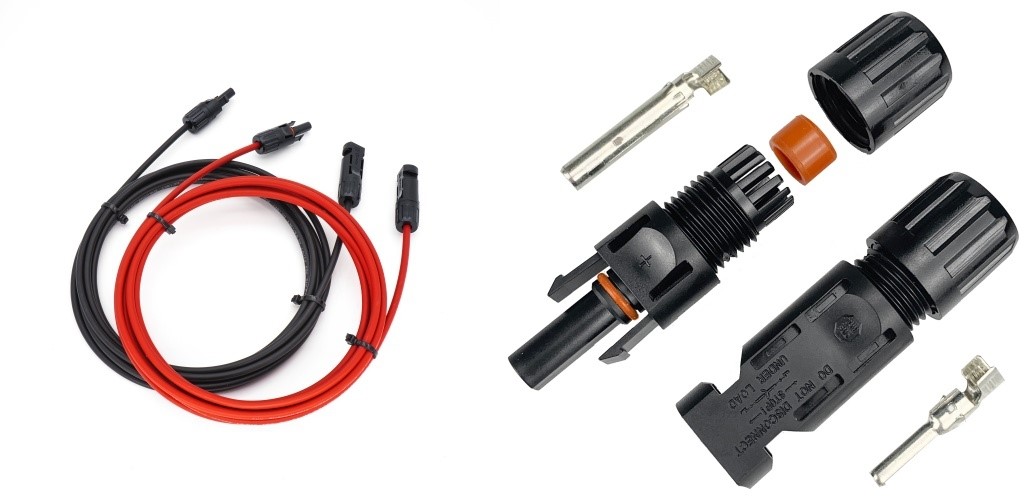
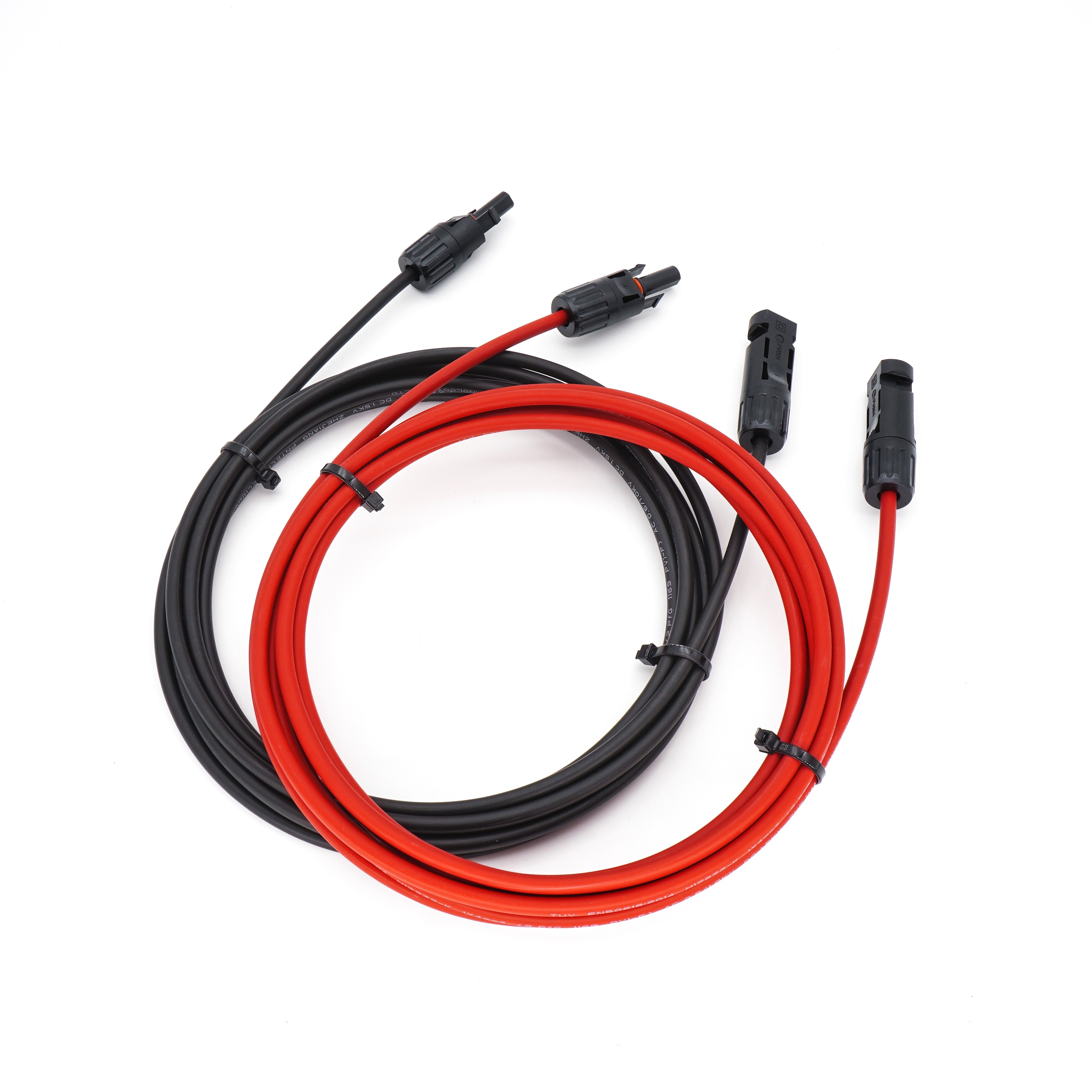
This solar extension cable set (1 metre, 4mm²) is the professional solution for safely bridging the distance between solar modules and inverters or charge controllers. The set usually consists of two cables: one red cable for the positive pole (+) and one black cable for the negative pole (-). This colour coding effectively prevents dangerous polarity reversal errors during installation.
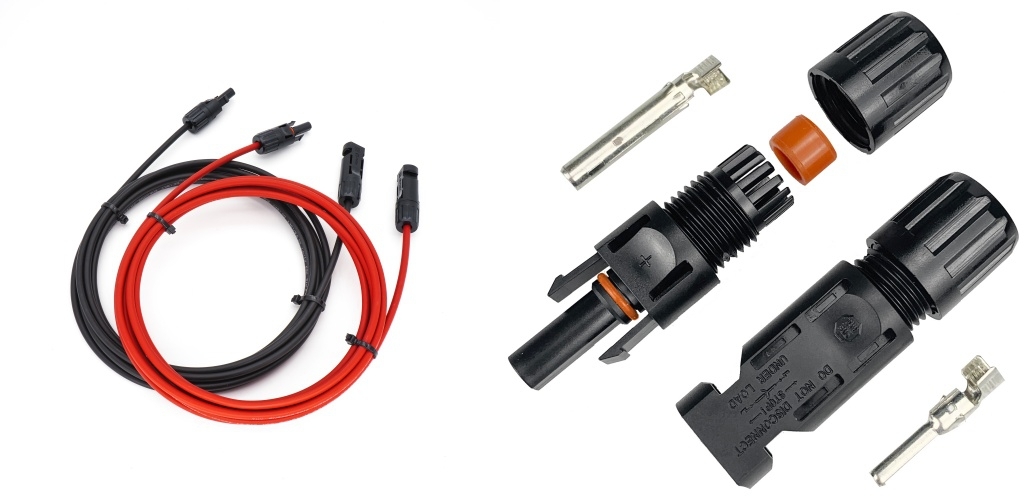
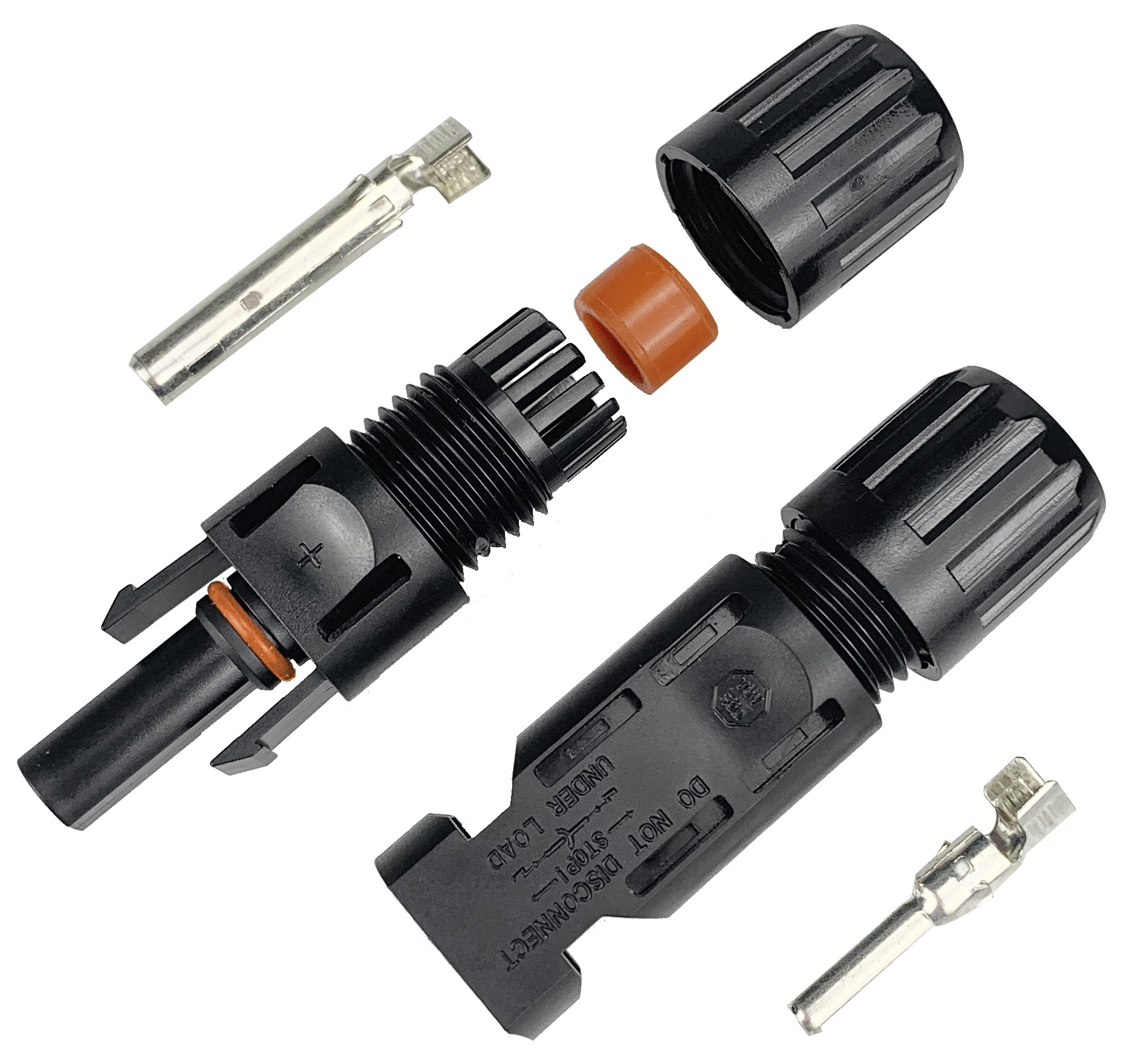
The cables are already pre-assembled with MC4-compatible plugs and sockets on both sides (“Plug & Play”). You do not need to purchase any crimping tools – simply plug them together and you are done. The high-quality insulation has been specially developed for decades of outdoor use: it is extremely UV-resistant, weatherproof and withstands large temperature fluctuations.
Highlights at a glance
- Plug & Play: Pre-assembled with MC4-compatible plug connectors (plug + socket) for immediate use.
- Colour coding: Set consisting of Red (+) and Black (-) ensures error-free installation and fast assignment of the poles.
- Weatherproof (IP67): The connectors are dustproof and protected against brief submersion—ideal for rain and snow.
- UV- & ozone-resistant: The tough outer sheath made from cross-linked polyolefin withstands harsh sunlight for years without becoming brittle.
- High-quality conductor: The tinned copper cable (4mm²) ensures minimal resistance and the lowest power loss over this short distance.
- Certified safety: Meets common standards (e.g. TÜV, EN 50618) for photovoltaic installations up to 1000V/1500V DC.
Areas of application
The 1 metre extension is ideal for short bridging:
- Balcony power stations: If the cables on the solar module are just too short to reach the micro inverter.
- Series connection (strings): To connect two modules installed next to or above each other.
- Camping & boat: For flexible setup of mobile solar cases or panels in the sun while the vehicle remains in the shade.
- Off-grid systems: Connection from the roof to the charge controller for short routes (e.g. garden shed).
Installation & safety instructions
- Audible click: When plugging together, ensure that the plugs engage with a distinct “click”. Only then is the connection sealed and electrically safe.
- Do not disconnect under load: Never separate the plug connections while current is flowing (i.e. when the sun is shining and the inverter is operating). A dangerous arc may form. Cover the modules beforehand or switch off the inverter.
- Bending radius: Do not sharply bend the cables, especially not directly behind the connector housing, to avoid compromising the seal.
- Mounting: Do not leave the cables loose in the wind. Secure them to the module frame or substructure with UV-resistant cable ties to avoid chafing.
Properties
| Product name | Solar extension cable set (1 m) |
| Cable length | **1.0 metre** (per cable) |
| Cable cross-section | **4.0 mm²** |
| Rated voltage | **1000 V / 1500 V DC** |
| Connector type | **MC4-compatible** |
| Conductor material | Copper (tinned) |
| Degree of protection (connected) | **IP67 / IP68** (waterproof) |
| Temperature range | -40°C to +90°C |
| Colours in the set | 1x Red (+), 1x Black (-) |
| Standards / certificates | EN 50618 (H1Z2Z2-K) |
FAQs about the 1m solar extension cable
Is a 4mm² cross-section sufficient or do I need 6mm²?
For a length of 1 metre and standard applications, 4mm² is perfectly adequate. Over such a short distance, the voltage drop is negligibly low. 4mm² cables can easily carry currents up to approx. 40–50 amps. Standard solar modules typically supply only 10 to 14 amps. 6mm² cables are only worthwhile for very long distances (e.g. >20 metres) or extremely high-performance systems.
Can I also use the red cable for the negative pole?
Technically yes, but it is dangerous. The inside of the cable (copper) and the connectors are identical. The colour of the insulation is only for marking. If you use “Red” for “minus”, the system will work, but there is an extremely high risk of confusion during later maintenance work or expansion, which can destroy the inverter.
Are the cables suitable for underground installation?
Conditionally. Although the insulation is very robust, standard solar cables are not explicitly designed for direct laying in the ground without a protective conduit (hazards from rodents, standing water, stones). Always use an empty conduit or protective tube in the ground.| Cross-section of the conductor: | 4.00 mm² |
|---|
Login