
Recessed ceiling emergency light with LiFePO4 battery 3.2V 1.5Ah
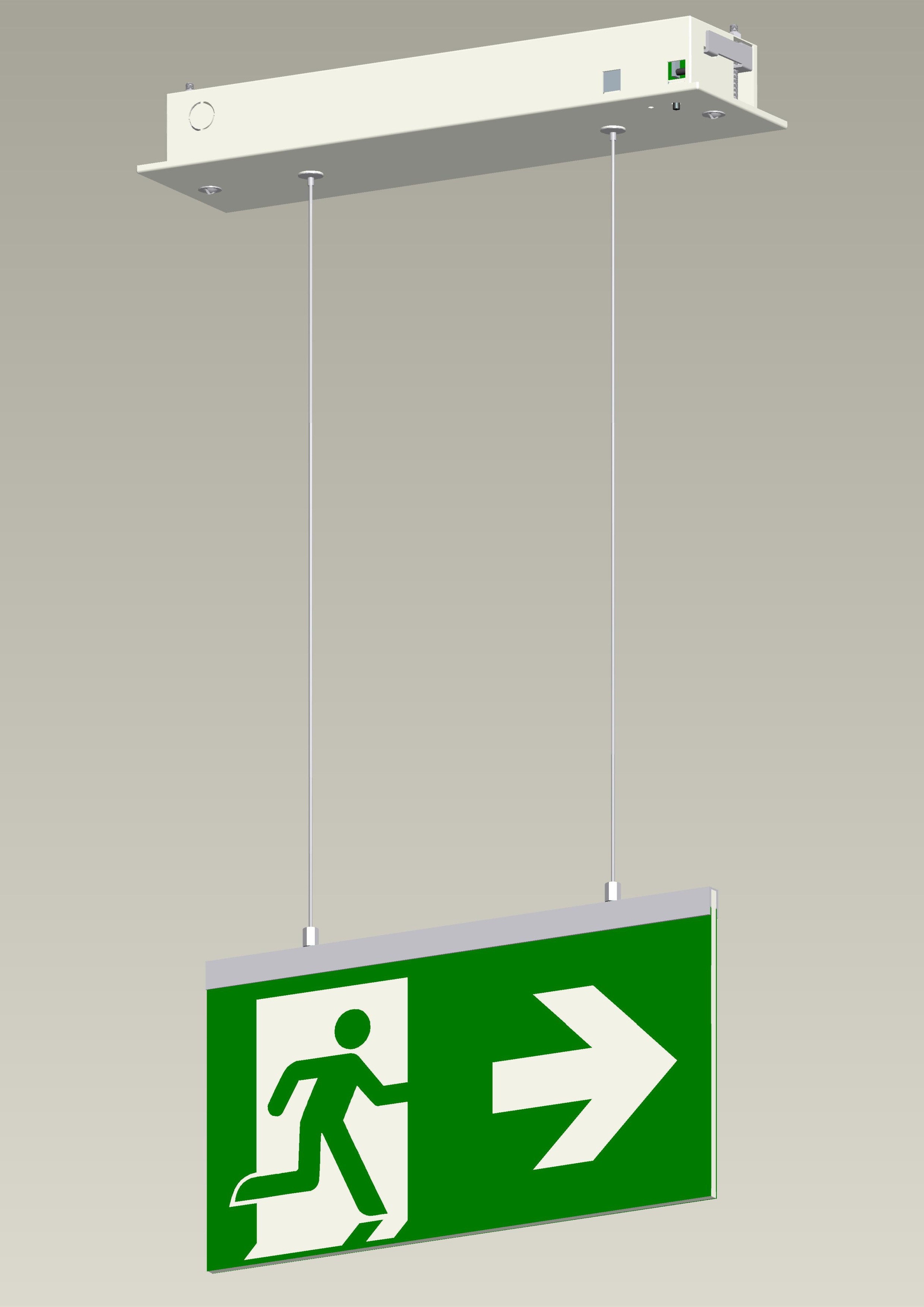
Description
Product information
This recessed ceiling emergency light is a modern and technologically advanced safety light, designed for a discreet and seamless integration into suspended ceilings. It combines long-life LED technology with a highly safe lithium iron phosphate (LiFePO4) battery with 3.2V and 1.5Ah, ensuring maximum safety and reliability in an emergency. Thanks to the integrated single-battery system with auto-test function, it is the ideal, low-maintenance solution for professional construction projects.
Highlights at a glance
- Single battery system: Integrated 3.2V LiFePO4 battery for self-sufficient operation of up to 3 hours.
- Long-life LiFePO4 technology: Offers maximum cycle stability, long service life (up to 8 years) and maximum operational safety.
- Discreet recessed mounting: For unobtrusive and architecturally appealing installation in grid or plasterboard ceilings.
- Automatic test function: Carries out regular self-tests and indicates the status via an LED, which simplifies maintenance.
- Optimised illumination: Interchangeable lenses for demand-oriented escape route or anti-panic lighting.
Reliable emergency lighting for professional properties
This emergency light is the ideal solution for a wide range of professional construction projects that prefer decentralised emergency power supply. It is perfect for installation in office buildings, sales outlets, schools, hospitals and corridors. The unobtrusive integration into the ceiling construction makes it the first choice for architects and planners who value a clear and calm ceiling design without compromising on safety.
Superior and safe LiFePO4 battery technology
At the heart of the self-sufficient supply is the integrated lithium iron phosphate (LiFePO4) battery. This modern battery technology is considered the safest and most durable in the lithium-ion range. It offers an extremely high number of charge and discharge cycles, is thermally stable and intrinsically safe, which minimises the risk of fire. Compared to conventional NiCd batteries, it offers a significantly longer service life, higher efficiency and better environmental compatibility.
Designed for easy installation and minimised maintenance
The light is designed for quick and error-free installation by the professional tradesperson in ceiling cut-outs. The automatic test function (autotest) automatically checks the function of the light source and battery at regular intervals and signals the status via a multicoloured LED. This greatly reduces the manual testing effort and lowers operating costs over the entire lifetime of the building.
Features
| Model | Recessed ceiling emergency light (single battery) |
| General luminaire data | |
| Application | Escape route lighting |
| Mounting type | Ceiling recessed |
| Operating mode | Continuous / standby mode |
| Light source | High-power LED (integrated) |
| Luminous flux (lumen) | approx. 150 |
| Installation diameter (mm) | approx. Ø 70 |
| Integrated battery | |
| Technology | LiFePO4 |
| Rated voltage (V) | 3.2 |
| Capacity (Ah) | 1.5 |
| Autonomy time (h) | 3 |
FAQs on the single-battery emergency light with LiFePO4 battery
What is the advantage of a LiFePO4 battery in an emergency light?
Lithium iron phosphate (LFP/LiFePO4) is the safest lithium-ion technology. It is extremely cycle-resistant, which allows a very long service life of up to 8 years and halves the replacement intervals compared to old NiCd batteries (approx. 4 years). It is also more environmentally friendly as it contains no heavy metals such as cadmium.
What does "Autotest" function mean?
The light automatically performs the legally required function tests (e.g. weekly short test, annual endurance test). The result is displayed directly on the luminaire via a status LED. This saves the operator the time-consuming manual testing of each individual light and ensures complete documentation of operational readiness.
Can the light be operated in continuous and standby mode?
Yes, modern single-battery lights like these are generally suitable for both modes of operation. In the standby mode (BS) the light only switches on in the event of a power failure. In the continuous mode (DS) it remains permanently lit and serves, for example, as part of the general lighting in normal operation.
What are different lenses needed for?
Different areas in a building require different lighting patterns. An escape route lens creates a long, narrow light corridor to optimally illuminate escape routes. An anti-panic lens creates a wide, square light distribution to evenly illuminate large, open areas such as foyers or halls and prevent panic.Documents 1
Reviews 0
Login