
Batterytester Plug & Play - Universal diagnostic system for e-bike & tool batteries

Description
Product information
The "Batterytester Plug & Play" is the professional and universal solution for diagnosing rechargeable batteries in workshops and service centres. Whether e-bike (pedelec), power tool, garden tool or mobile medical technology – this device enables manufacturer-independent checking of battery capacity and state of health (SoH). In combination with the powerful PC software and the matching smart adapters, you can perform fully automatic discharge tests and provide your customers with professional test reports.
Highlights at a glance
- Universal compatibility: Tests all common battery technologies (Li-Ion, LiFePO4, Li-Po, NiMH, NiCd, lead-acid) in the voltage range from approx. 3V to 60V.
- Plug & Play system: Simple handling thanks to a modular concept – the base device is simply connected to the matching adapter (e.g. for Bosch, Yamaha, Panasonic).
- Professional logging: The included PC software automatically creates detailed service reports with discharge curve, capacity and rating.
- Realistic load simulation: Carries out real discharge tests under load to find weak points that remain hidden during pure voltage measurement.
- Future-proof: Thanks to interchangeable adapters and software updates, the system is equipped for future battery generations.
- High safety: Integrated protection against reverse polarity, overheating and short circuit ensures safe operation in the workshop.
The centrepiece of modern battery diagnostics
Unlike simple multimeters which only measure voltage, the Batterytester Plug & Play performs a full cycle test. It discharges the battery in a controlled manner and measures precisely the energy (Wh) and charge (Ah) drawn. This is the only reliable way to determine if a used battery still has the required range for an e-bike or the required power for a tool.
Modular and expandable
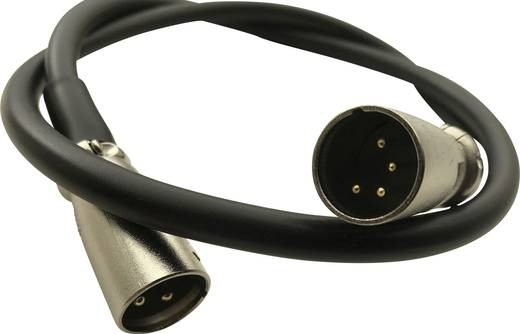
The strength of this system lies in its versatility. While you can use universal cables for standard batteries (open cable ends), specialised "Smart Adapters" are available for complex e-bike systems (such as Bosch, Yamaha, Brose, Shimano). These take care of communication with the battery management system (BMS) and make testing as easy as plugging in ("Plug & Play").
Features
| Model | Batterytester Plug & Play (Universal diagnostic system) |
| Application | Capacity measurement & diagnosis for e-bike and tool batteries |
| Voltage range | 6 V - 48 V nominal (measuring range 3 V - 60 V) |
| Discharge current | 0.5 A - 10 A (adjustable, standard 5 A) |
| Supported technologies | Li-Ion, Ni-MH, Ni-Cd, lead-acid (Pb) |
| Measuring method | Real load test (simulation) with internal resistance measurement (Ri) |
| Output | Integrated thermal printer (instant printout) & PC interface (USB) |
| Compatibility (adapter) | Universal (clamps) + Smart Adapter for Bosch, Yamaha, Panasonic, Giant, Brose, and more |
| Dimensions (L x W x H in mm) | approx. 250 x 170 x 125 |
| Weight (kg) | approx. 2.6 |
FAQs about Batterytester Plug & Play
Do I need a special adapter for each battery?
Not necessarily. For batteries with simple plus/minus contacts (without complex communication), the included universal cable is sufficient. For modern e-bike batteries (Bosch, Yamaha, etc.) that do not deliver current without communication, you will need the respective "Smart Adapter".
Can the device also repair ("refresh") batteries?
The device is primarily a diagnostic tool to determine the actual condition. With NiCd and NiMH batteries, a training effect can be achieved through repeated cycles (charging/discharging). However, defective lithium cells cannot be repaired, but the device helps you to identify them safely.
Do I need a PC to use it?
Yes, a PC or laptop (Windows) is necessary for the full range of functions. The software controls the test process, visualises the discharge curve in real time and generates the printable PDF test report for your customers.
How long does a test take?
This depends on the capacity of the battery and the selected discharge current. A complete capacity test (from 100% to 0%) usually takes several hours (approx. 2–4 hours), as this is the only way to measure the chemical capacity exactly. A quick test (internal resistance measurement) takes only a few seconds but is less meaningful regarding the range.
Reviews 0
Login